Subscribe to the Point of View
Sign upBy clicking Sign Up, you're confirming that you agree with our Terms and Conditions.


Diminishing Demand
Week Ending: September 5, 2025
Diminishing Demand
PCE* Non-housing Services Inflation Versus Vacancy-To-Unemployed (v/u) Ratio**
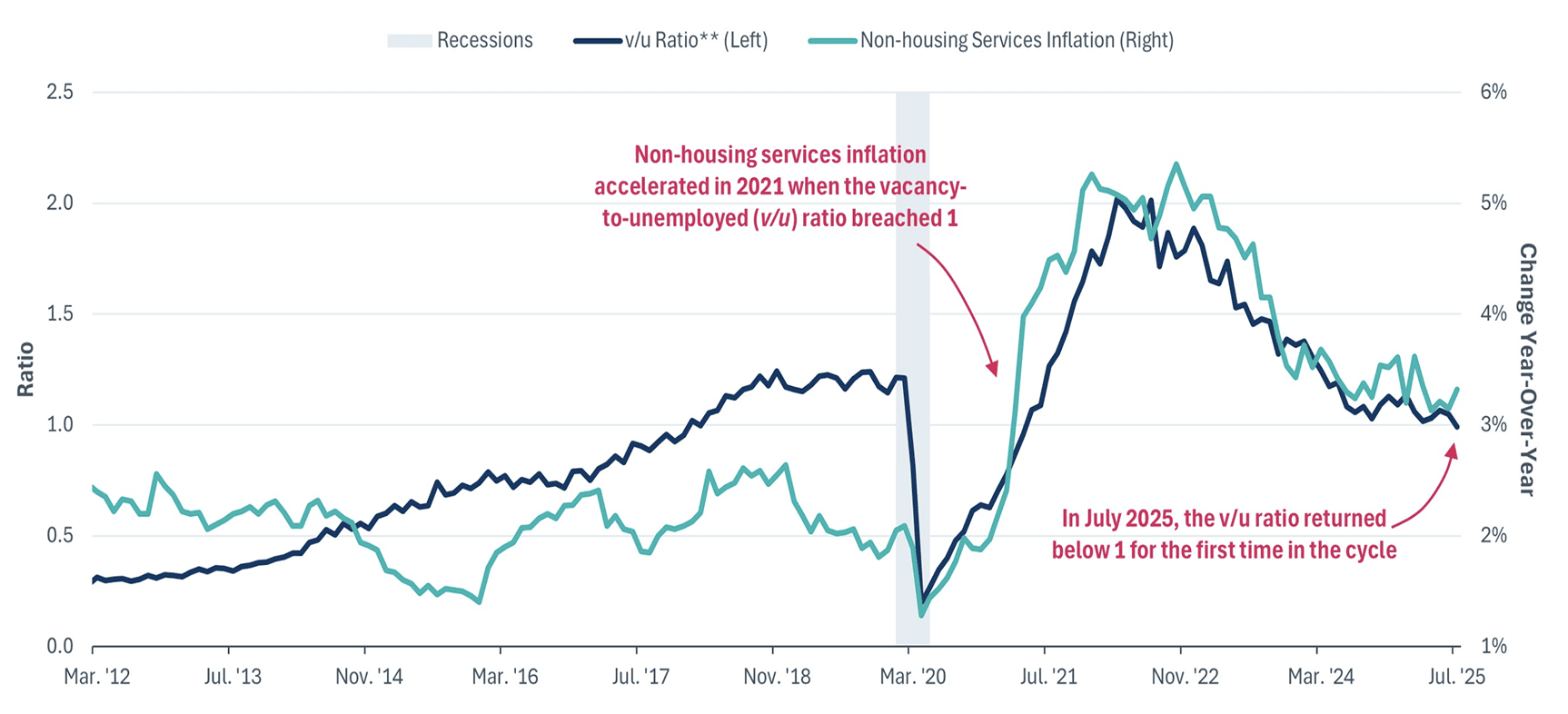
Chart footnote / source
This week, Nvidia, the worlds most valuable company and a leading semiconductor designer, reported a 56% year-over-year increase in revenue for Q2 2025. Days before Nvidias earnings release, the U.S. government also announced that it had taken a 10% equity stake in Intel, another American semiconductor company. What explains the interest from investors and the federal government? Compute is the new crude oil, and significant shifts have already taken place in the industry, with private AI compute ownership worldwide rising from 40% in 2019 to 80% today. When defined in terms of AI compute a country possesses, the U.S. dominates with a 72% share of global AI compute capacity, while China is the only other nation with a double-digit share, at 16%. However, the hardware required to generate computing power, namely semiconductor manufacturing, remains global, with Taiwans TSMC still the undisputed leader. If continued private and public sector support can ramp up advanced chip production in the U.S., future U.S. dominance in both computing capacity and semiconductor manufacturing may be possible.
Total Returns by Asset Class
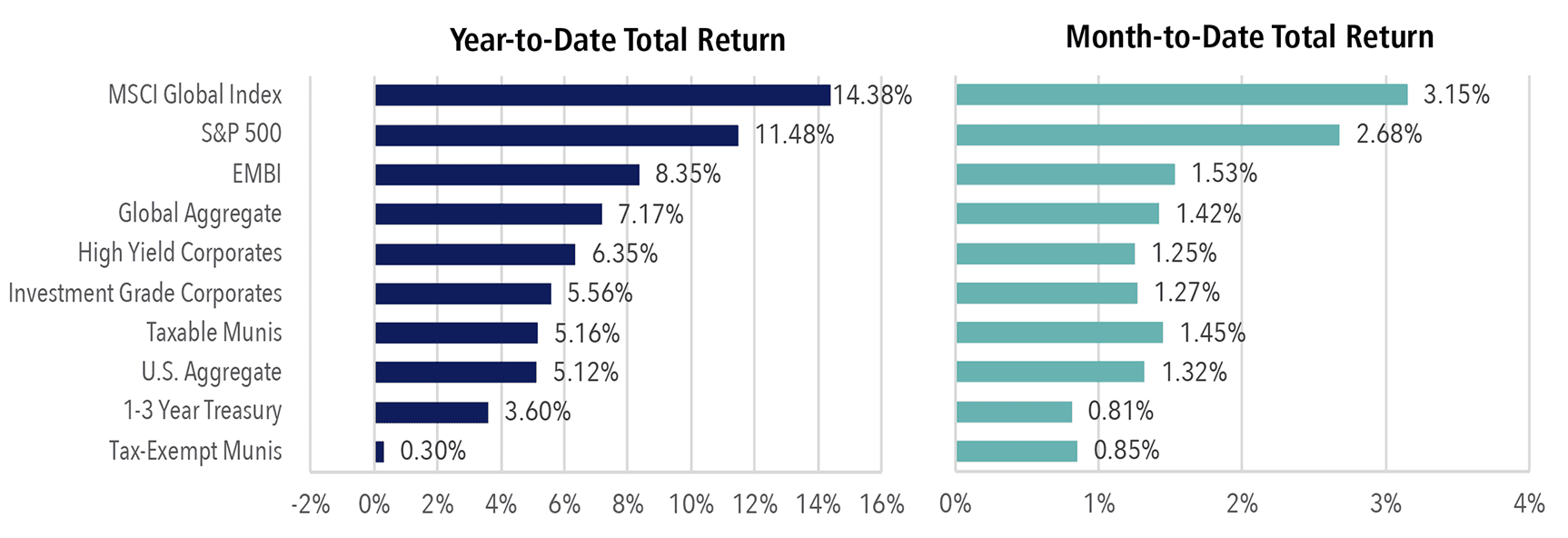
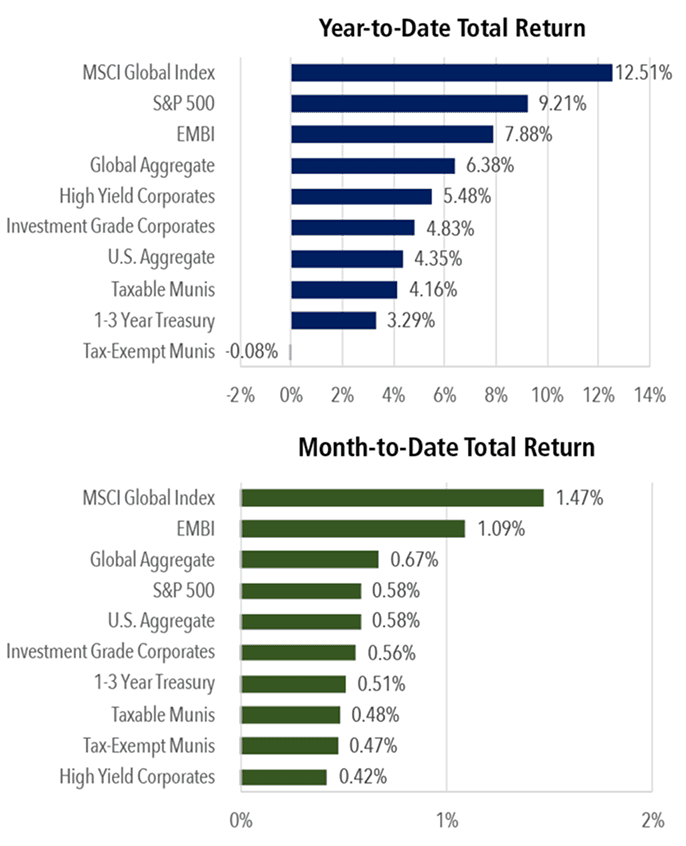
Chart footnote / source
Highlights of the Week:
Municipals: This week, LSEG Lipper reported $591 million of municipal fund inflows, entirely driven by ETFs. Year-to-date inflows have now increased to $24 billion.
Equities: The U.S. equity market finished the week modestly lower after hitting new record levels earlier in the week, as mixed corporate earnings weighed on momentum. Sector performance was mixed, with consumer staples, utilities, and healthcare being the worst performers, while energy, financials, and communications were the best performers.
Securitized Products: The asset-backed securities primary market saw muted activity before Labor Day weekend. Spreads moved tighter in the secondary market due to the lack of new issue supply and strong investor appetite for investment-grade fixed-rate credit. Market participants expect the primary calendar to pick up again in September.
Payden's expert insights delivered to your inbox
Sign up for updates, including the Week in Review and Payden & Rygel Point of View.
By clicking Sign Up, you're confirming that you agree with our Terms and Conditions.